Everybody's a Dancer Now: How TikTok Blew Up the Velvet Rope Around American Dance Culture
Photo: Riksarkivet (National Archives of Norway) from Oslo, Norway, No restrictions, via Wikimedia Commons
The Old Rules Don't Apply Anymore
There used to be a clear hierarchy in American dance culture. You trained at a studio from childhood, or you didn't. You had the right body, the right technique, the right connections — or you watched from the audience. The gatekeepers were real, and they had opinions about who deserved to be called a dancer.
Then TikTok happened.
It sounds reductive to say that a social media platform dismantled decades of institutional gatekeeping. But the evidence is hard to argue with. Since TikTok exploded in the United States around 2019 and 2020, dance — who creates it, who performs it, who gets credited for it, and who gets celebrated for it — has undergone a seismic shift. The conversation is complicated, messy, and still very much in progress. But one thing is clear: the velvet rope is gone.
Fifteen Seconds and a Phone Camera
What makes TikTok structurally different from, say, YouTube or Instagram for dance isn't just the short format. It's the algorithm. Unlike platforms that amplify accounts with existing followings, TikTok's For You Page has a genuine (if imperfect) ability to surface content from unknown creators and put it in front of millions of people overnight.
For dancers who had never been cast in a video, never made it past the first round of a competition, never had the money for years of conservatory training — this was a revelation.
Jalen Brooks, a 22-year-old self-taught dancer from Memphis, posted his first TikTok in 2020. He had no formal training, no industry connections, and no following. Within a week, a clip of him doing a freestyle routine in his apartment had over 4 million views.
"I'd been dancing my whole life, just for myself and my family," he says. "I never thought 'dancer' was something I could be. That word felt like it belonged to other people." After the TikTok blew up, he was approached by a music label looking for choreographers for an upcoming video. "The platform didn't care about my résumé. It just cared about whether people wanted to watch me move."
Black Creators and the Credit Problem
But the TikTok dance revolution is not without its deep and ongoing tensions. Perhaps the most significant — and most discussed — is the issue of credit, appropriation, and who actually profits when a dance goes viral.
The pattern has become depressingly familiar: a Black creator invents a move or a sequence, it spreads organically through Black TikTok, and then it gets picked up by a white creator with a larger following who performs it to millions of viewers — sometimes without acknowledgment, and almost always with more brand deal opportunities.
The "Renegade" controversy of 2020 became a flashpoint. The choreography was created by Jalaiah Harmon, a 14-year-old Black girl from Georgia. It became one of the most replicated dances in TikTok history. For months, it was credited to Charli D'Amelio, a white creator who had performed it to her much larger following. Harmon eventually received recognition, but only after sustained public pressure from Black creators and cultural commentators.
This isn't an isolated incident. It's a structural issue that mirrors the long history of Black artistic innovation being absorbed into mainstream culture without proper attribution or financial benefit. Dance historian and cultural critic Yolanda James, who writes about movement and race, frames it this way: "TikTok democratized the distribution of dance. It did not automatically democratize the economics or the credit. Those are still being fought for."
The fight is ongoing. Movements like the #CreditBlackCreators campaign have pushed for more accountability, and some brands have begun explicitly seeking out original creators for collaborations. But the problem is structural, not just individual, and a hashtag campaign can only do so much.
Gen Z Rewrites the Rules of What Dance Looks Like
Set aside the credit debates for a moment — and they shouldn't be set aside for long — and there's still something genuinely remarkable happening in how Gen Z is expanding the visual and cultural vocabulary of American dance.
On TikTok, you'll find wheelchair users performing intricate upper-body choreography that challenges every assumption about what a dancer's body looks like. You'll find plus-size dancers with millions of followers executing technically demanding moves while simultaneously, simply by existing and thriving, dismantling the idea that dance belongs to one body type. You'll find neurodivergent creators who've found in the platform a community that celebrates their unique movement styles rather than trying to correct them.
This visibility matters enormously. For a kid growing up in rural Kansas who doesn't look like the dancers on So You Think You Can Dance, seeing someone who looks like them go viral can be the difference between pursuing movement and abandoning it.
Taylor Nguyen, a 19-year-old Vietnamese-American dancer from Houston, describes TikTok as "the first place I ever saw someone who looked like me being celebrated for dancing, not just as a novelty." She's built a following of 340,000 people posting videos that blend traditional Vietnamese folk movement with contemporary hip-hop. "I couldn't have invented that fusion in a traditional studio setting. The algorithm rewarded it. That tells you something about what people actually want to see."
The Choreography Economy
TikTok hasn't just changed who dances — it's changed how dance is valued economically. A choreographer who goes viral can now monetize their work through brand partnerships, merchandise, online classes, and live events in ways that bypass the traditional industry infrastructure entirely.
This is significant for communities that have historically been underserved by that infrastructure. Dance studios in lower-income neighborhoods have struggled to survive. Formal training has always been expensive and inaccessible. TikTok created an alternate path — not a perfect one, not an equitable one, but a real one.
Some established dance professionals have complicated feelings about this. Veteran choreographer and Broadway veteran Marcus Vega puts it diplomatically: "I think it's genuinely exciting that more people are making a living from movement. I also think there's something being lost when the standard becomes 'what performs well in 15 seconds.' Depth takes time. Nuance takes time. The platform doesn't always reward that."
It's a fair point. TikTok's format inherently favors the immediately legible — the catchy, the repeatable, the visually striking in the first two seconds. Dance as a long-form art practice, with its layers of technique and meaning, doesn't always translate. Both things can be true: TikTok has opened doors AND it has reshaped the art form in ways worth examining critically.
So Who Gets to Be a Dancer?
The honest answer, in 2024, is: more people than ever before. That's worth celebrating, with eyes open to the inequities that persist within that expansion.
At Reborn to Dance, we believe movement belongs to everyone — not as a slogan, but as a genuine philosophy. The TikTok revolution, for all its messiness, has pushed that idea further into the mainstream than any single studio, competition show, or dance company ever could.
But democratization isn't the same as justice. The next chapter of this story — the one being written right now, by creators, advocates, and communities fighting for fair credit and equitable opportunity — will determine whether the open door actually leads somewhere equal.
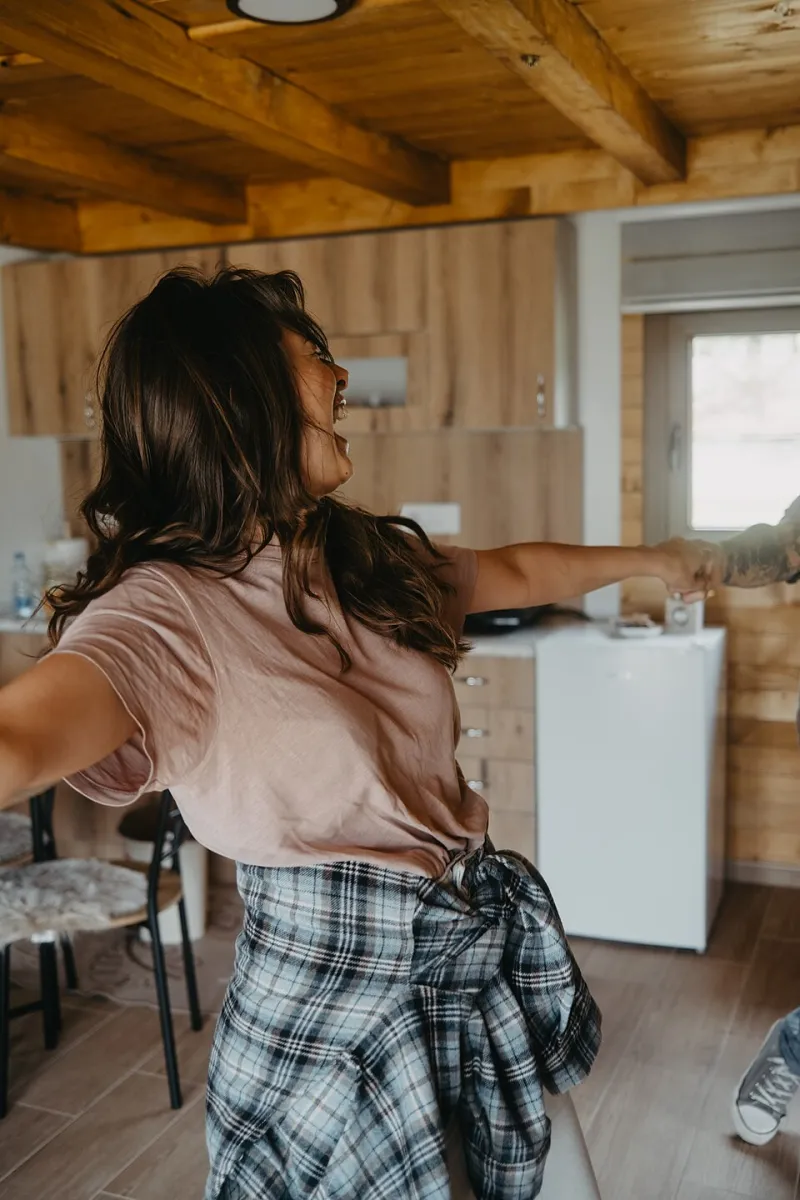
In the meantime, somewhere in America right now, someone is dancing in their kitchen, their dorm room, their backyard. They're posting it. Someone else is watching and feeling, for the first time, like maybe they could do that too.
That spark? That's the revolution. The rest is still being negotiated.