Your Body Has Been Keeping Score: The Real Science Behind Dance as Somatic Healing

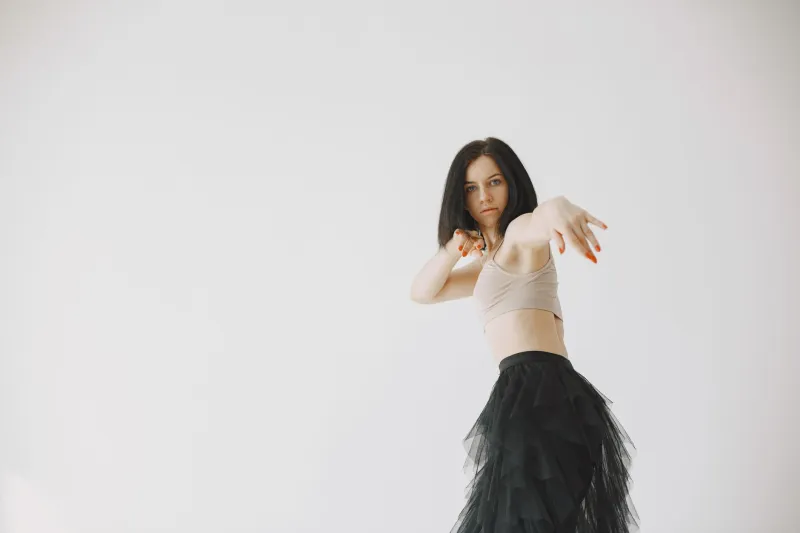
Photo by Photo by Vitaly Gariev on Unsplash on Unsplash
Something strange happens to a lot of dancers at some point in their practice. They're mid-combination — maybe a sustained port de bras, maybe a hip-hop groove they've run a hundred times — and without any obvious trigger, they start crying. Or shaking. Or laughing in a way that doesn't feel entirely voluntary. They weren't thinking about anything particularly heavy. And yet something moved through them.
This isn't mysticism. It's biology.
And researchers are starting to catch up to what dancers have known in their bodies for years: movement doesn't just express emotion. It stores it, and under the right conditions, it releases it too.
What "Stored Trauma" Actually Means in the Body
The phrase gets tossed around a lot in wellness spaces, sometimes so loosely it loses its meaning. But there's a legitimate physiological story here.
When the body experiences stress or threat — whether that's a car accident, a difficult childhood, a single terrifying moment, or years of low-grade chronic pressure — the nervous system responds. The amygdala fires. Stress hormones flood the system. Muscles brace. Breath shortens. The body prepares to fight, flee, or freeze.
In a healthy stress response, once the danger passes, the activation resolves. But when a threat is overwhelming, inescapable, or repeated, the nervous system can get stuck in a kind of unfinished loop. The physiological arousal that was never fully discharged doesn't just disappear — it gets encoded in the body's tissues, posture, and movement patterns.
Dr. Bessel van der Kolk's landmark work, most accessibly laid out in his book The Body Keeps the Score, helped bring this understanding into mainstream awareness. His argument — and the argument of a growing body of somatic researchers — is that trauma isn't primarily a story the mind tells. It's a state the body holds.
That's where dance enters the picture in a way that purely talk-based therapies sometimes can't.
Movement Changes the Brain, Not Just the Mood
Here's where it gets genuinely fascinating. Repetitive, rhythmic movement — the kind that forms the backbone of almost every dance tradition — has measurable effects on neural activity.
Rhythmic movement activates the cerebellum and basal ganglia, structures involved in both motor coordination and emotional regulation. It engages the vestibular system, which plays a role in how safe and grounded the body feels in space. And crucially, it can shift the nervous system out of sympathetic overdrive (that fight-or-flight state) and into a more regulated parasympathetic mode.
There's also the question of neuroplasticity — the brain's capacity to literally rewire itself based on repeated experience. Every time you practice a movement pattern, you're strengthening the neural connections that support it. Dance therapists and somatic practitioners argue that this same mechanism works in reverse: by introducing new, intentional movement patterns into the body, you're not just learning choreography. You're creating new neural grooves that can gradually override older, fear-based patterns.
Put plainly: the body that learned to hunch its shoulders and hold its breath can, through consistent movement practice, learn something different.
Why Breakthrough Moments Feel Physical First
Ask dancers who've been through any kind of intensive movement practice — whether that's formal dance/movement therapy (DMT), contact improv, somatic bodywork, or even just years of committed studio training — and many of them will describe their biggest breakthroughs not as realizations but as releases.
A trembling that starts in the hips and moves up the spine. A sob that comes from somewhere below the throat. A sudden, inexplicable sense of lightness after a particularly demanding floor sequence.
This tracks with what somatic practitioners describe as the body completing an interrupted stress response. When movement creates enough safety and rhythmic attunement, the nervous system can finally finish what it started — and the discharge of that long-held tension often registers as physical sensation before it registers as thought or emotion.
Dance/movement therapy, a field with formal clinical training and board certification in the US, operates directly on this understanding. DMT practitioners work with clients across a huge range of contexts — trauma recovery, eating disorders, grief, PTSD — using structured and improvisational movement as the primary therapeutic tool.
You Don't Have to Be in Therapy to Experience This
Here's the part that matters for the everyday dancer: you don't need a clinical setting for movement to do some of this work.
The same mechanisms that operate in a therapeutic context are available in a regular dance class, a late-night freestyle session, or an ecstatic dance gathering. The key ingredients — rhythm, repetition, embodied attention, a sense of physical safety — are present whenever we dance with some degree of presence and intention.
That said, there's a spectrum. For people carrying significant trauma, working with a trained DMT or somatic practitioner offers containment and guidance that a regular class can't provide. The dance floor isn't a substitute for therapy, and it's worth being honest about that.
But for many people, consistent movement practice functions as ongoing nervous system maintenance. It builds the kind of body literacy — the ability to notice sensation, tolerate discomfort, and move through emotional states rather than around them — that makes healing more possible across the board.
What to Do With This
If you've ever had an unexpected emotional release on the dance floor and wondered what was happening, now you have some language for it. Your body wasn't malfunctioning. It was doing exactly what it's designed to do when given the right conditions.
If you're curious about exploring this more intentionally, a few entry points worth knowing about: somatic movement classes, trauma-informed yoga (which shares many of the same principles), authentic movement practice, and formal dance/movement therapy with a credentialed practitioner.
And if you just want to keep dancing for the love of it — that's enough too. The body keeps score, yes. But it also keeps dancing. And somewhere in that repetition, something is always being rewritten.