Why Dance Crews Are Replacing Happy Hours as America's Favorite Way to Connect

Photo by Photo by Cord Allman on Unsplash on Unsplash
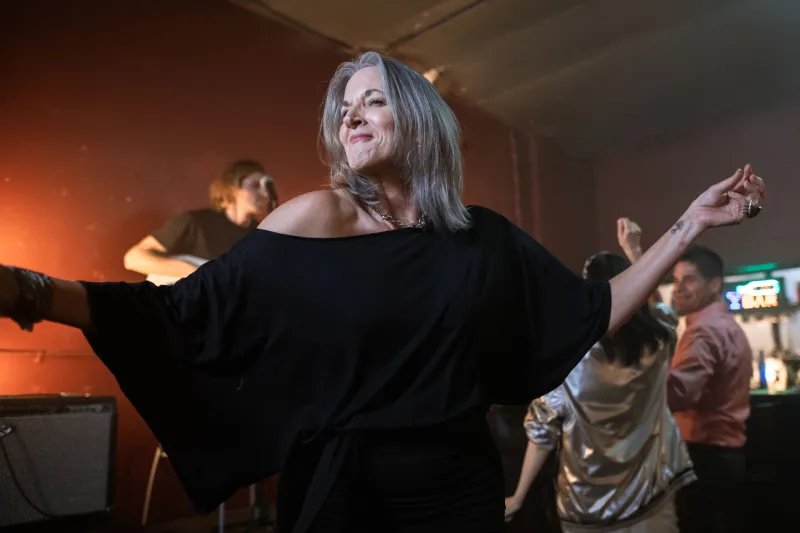
On a Tuesday night in a rented studio in East Austin, twelve adults who didn't know each other six months ago are running the same eight-count for the fourth time in a row. Someone makes a face. Someone else laughs. The person in the back finally nails the transition they've been fumbling, and three people near them spontaneously cheer.
Nobody's checking their phone.
This is what community looks like in 2025, and it looks a lot like a dance crew.
The Loneliness Problem Nobody's Solving (Except Maybe Dance)
The numbers on American loneliness are genuinely alarming. The US Surgeon General declared a loneliness epidemic in 2023. Polling consistently shows that younger adults — Gen Z especially — report fewer close friendships and less sense of belonging than previous generations at the same age. Traditional social infrastructure — the church, the bowling league, the neighborhood bar — has been hollowing out for decades.
What's quietly filling the gap, in cities and suburbs across the country, is organized movement.
Dance crews, choreography collectives, social dance meetups, and weekly group classes are functioning as something the wellness industry rarely talks about: genuine third places. Not home, not work — somewhere you go to be known, to show up consistently, to be part of something that has a rhythm and a history and inside jokes.
"People come for the dancing," says Marcus Webb, who runs a hip-hop collective in Chicago's Bronzeville neighborhood. "They stay because they found their people. I've watched friendships form in my classes that are tighter than anything most of these folks have from college."
What Makes Dance Different From the Gym
This is worth unpacking, because on the surface, a fitness class is also a group activity. You show up, you move, you leave. So why do dance groups seem to generate something qualitatively different?
A few things appear to be doing real work here.
First: shared vulnerability. Learning choreography means being bad at something in front of other people, repeatedly, before you get good at it. That particular flavor of shared struggle creates bonding in a way that parallel exercise — everyone on their own treadmill — simply doesn't.
Second: physical synchrony. There's actual research suggesting that moving in rhythm with other people increases feelings of connection and even pain tolerance. Humans have been using synchronized movement — in ritual, in work, in celebration — to build group cohesion for as long as we've been human. A dance class is, among other things, a very old technology for belonging.
Third: identity. Dance styles carry cultural and subcultural histories. When you join a crew built around house music, or West African dance, or cumbia, you're not just learning steps — you're joining a lineage. That sense of being part of something larger than yourself is something a spin class can't really offer.
The Economics of Showing Up
It's worth being real about the financial picture, because access to dance community isn't equally distributed.
Studio classes in major metro areas can run $25–$40 a drop-in, which adds up fast if you're trying to build a consistent practice. Many choreography collectives charge monthly membership fees. For people in lower-income brackets, the economics can be a genuine barrier.
Some crew leaders are working against this directly. Destiny Okafor runs a contemporary dance collective in Atlanta that operates on a sliding scale model — members pay what they can, from $5 to $50 per session, with no questions asked and no visible difference in participation.
"I grew up not being able to afford classes," she says. "The whole point of what I'm building is that nobody gets priced out of their community. That's not a community — that's a club."
Other groups have found community centers, parks and rec programs, and church halls as affordable venues that keep costs down. The model varies, but the intention is increasingly explicit: these spaces are for everyone, not just people with disposable income and flexible schedules.
What Crew Leaders Are Actually Building
Talk to the people running these groups and you start to notice a pattern. They're not just teaching choreography. They're doing something closer to community organizing.
That means thinking carefully about who feels welcome when they walk in the door. It means handling conflict when it arises — and in any real community, it does. It means creating rituals that give the group a sense of shared history: the annual showcase, the end-of-session dinner, the playlist that only means something if you were there.
It also means holding space for people who are carrying a lot. Dance crews attract people in transition — people who just moved to a new city, people who recently went through a breakup or a loss, people who are quietly searching for something they can't quite name.
"I'm not a therapist," Marcus says. "But I know that what happens in my class goes way beyond dance. People come in closed and they leave open. That's the thing I'm most proud of."
You Already Have a Crew — You Just Haven't Found Them Yet
If you've been dancing solo — in your living room, in your car, in the back of a Zumba class where you don't talk to anyone — this is your nudge.
The crew is out there. It might be a salsa social at a local Latin restaurant on Fridays. It might be a hip-hop workshop at the community center. It might be an ecstatic dance gathering in someone's backyard.
The point isn't the style. The point is the showing up, week after week, in a room full of people who are also trying, also stumbling, also laughing at themselves.
That's not just dance class. That's community. And right now, we need it more than ever.