Your Brain on Dance: The Flow State Science That Makes Movement Feel Like Magic
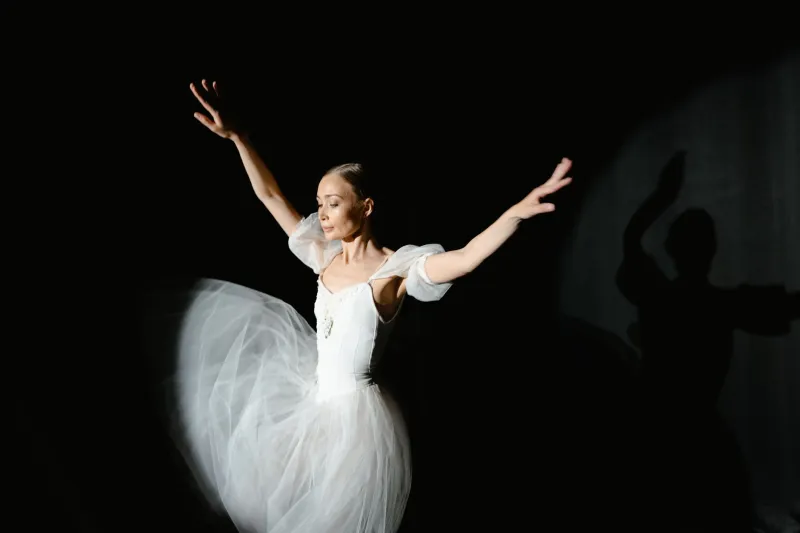
You know the feeling. You stop thinking about your grocery list. You forget to check your phone. The music hits, your body responds, and somewhere between the first eight-count and the last, you disappear into something bigger than yourself. Dancers call it being "in it." Psychologists call it flow. And neuroscientists are increasingly convinced that dance gets you there faster — and deeper — than almost anything else.
What Flow State Actually Is (And What It Isn't)
Psychologist Mihaly Csikszentmihalyi first mapped the concept of flow back in the 1970s, describing it as a state of complete absorption where self-consciousness evaporates and performance peaks. Athletes chase it. Musicians live for it. Gamers accidentally stumble into it at 2 a.m. But flow isn't just "being focused." At the neurological level, it's a specific cocktail of brain activity — and it's genuinely rare.
During flow, the prefrontal cortex — the region responsible for self-monitoring, judgment, and that inner critic that tells you your hips are off — goes quiet. This phenomenon, called transient hypofrontality, essentially takes your inner editor offline. Meanwhile, dopamine and norepinephrine flood the system, sharpening attention and amplifying pleasure. Serotonin and endorphins follow, creating that warm, effortless confidence that makes hard things feel easy.
The result? You stop performing and start being.
Why Dance Gets You There Faster
Here's where it gets interesting. Most flow-inducing activities — rock climbing, coding, playing chess — require a single type of cognitive engagement. Dance requires all of them simultaneously.
When you're learning a new combination, your brain is processing rhythm, spatial orientation, muscle memory, emotional expression, and social cues all at once. That multi-channel demand forces your nervous system to commit fully. There's simply no bandwidth left for rumination.
"Dance is one of the most neurologically complex things a human being can do," says Dr. Julia Christensen, a neuroscientist who studies music and movement at the Max Planck Institute. "You're integrating auditory input, motor output, proprioception, and social cognition in real time. That's an enormous demand — and it's precisely that demand that shuts down the default mode network."
The default mode network, or DMN, is the brain's "idle" system — the one that activates when you're daydreaming, overthinking, or replaying that cringeworthy thing you said in 2014. Chronic DMN overactivation is strongly linked to anxiety and depression. Dance, with its relentless multi-sensory demands, is one of the most reliable ways to knock it offline.
The Rhythm Factor
Rhythm deserves its own conversation. Entrainment — the brain's tendency to synchronize its electrical activity to external rhythmic stimuli — happens almost automatically when you move to music. Your neural oscillations literally align with the beat, creating a kind of internal metronome that anchors you to the present moment.
This is why even non-dancers feel something shift when a great song comes on. But for trained movers, that anchoring goes deeper. Years of practice wire the brain to drop into flow more readily, lowering the threshold for that transient hypofrontality to kick in.
"The more you dance, the easier it becomes to access that state," explains choreographer and somatic educator Marcus Rivera, based in Los Angeles. "It's like you're carving a groove in your nervous system. Eventually, the music starts and your brain just... lets go."
Movement as Nervous System Reset
Beyond flow, the neurological benefits of regular dance practice compound over time in ways that researchers are only beginning to fully document. A landmark 2003 study published in the New England Journal of Medicine found that of all leisure activities studied, dancing was the only one associated with a reduced risk of dementia — outperforming reading, crossword puzzles, and swimming.
More recent research from the University of Illinois found that older adults who participated in six months of social dance showed measurable increases in white matter integrity — essentially, healthier brain wiring. The combination of physical movement, musical timing, and social coordination appears to stimulate neuroplasticity in ways that single-modality exercise simply doesn't.
For people managing anxiety, depression, or trauma, this matters enormously. Dance doesn't just distract from distress — it actively rewires the neural pathways that generate it.
Getting Into Flow on Purpose
So how do you actually use this? A few things make flow more accessible on the dance floor:
Match challenge to skill. Flow lives in the sweet spot between boredom and overwhelm. If a routine is too easy, your mind wanders. Too hard, and anxiety blocks absorption. The goal is to work just at the edge of your current ability.
Let go of the mirror. Constant visual self-monitoring activates exactly the self-critical prefrontal activity you're trying to quiet. Try closing your eyes during practice, or turning away from your reflection.
Commit to the music. Stop treating rhythm as a background element. Let it be the foreground. Feel the beat before you move to it.
Repeat until it releases. Flow often arrives after the learning phase, not during it. Run a combination until your body knows it well enough that your conscious mind can step aside.
The Bigger Picture
In a culture obsessed with productivity hacks and optimization, there's something almost radical about an activity that works best when you stop trying. Dance doesn't ask you to grind harder. It asks you to surrender — to the music, to your body, to the moment.
And your brain, it turns out, is built for exactly that. The neuroscience isn't describing something mystical. It's confirming what dancers have always known: sometimes the fastest way out of your head is through your feet.
So the next time someone asks why you dance, you can tell them it's basically neuroscience. Or you can just put on your shoes and show them.