Center Stage at Last: The Women Who Stopped Watching and Started Dancing
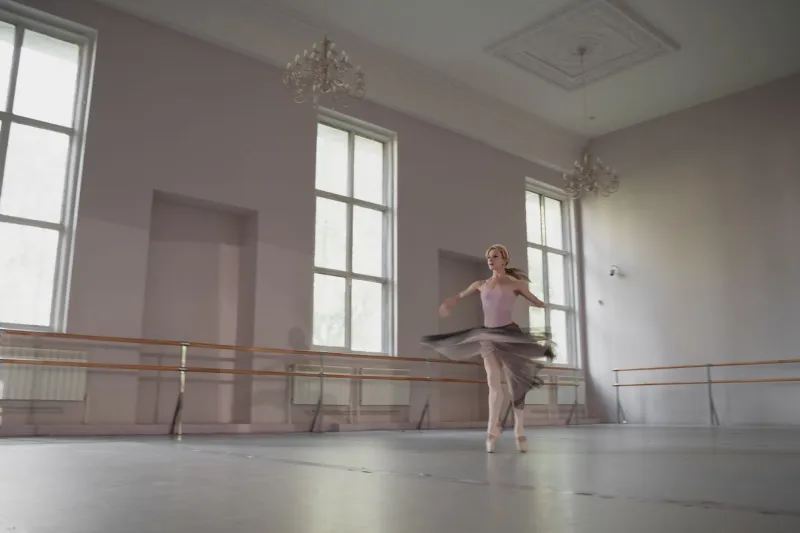
Kim Hartley spent eleven years inside dance studios. She knew which instructors were worth the premium rates, which competitions had the best lighting, which hairspray held through a two-hour recital. She could spot a sickled foot from forty feet away and had strong opinions about rhinestone placement. What she had never done, not once in all those years, was actually dance.
Her daughter aged out of competitive dance at 18. Kim signed up for her first adult ballet class at 49.
"The first day I walked in wearing actual dance clothes — not jeans, not mom clothes — and stood at a barre, I started crying before the music even started," she says. "I didn't even know why. I just knew something was happening that was for me."
Kim is not an outlier. She is the leading edge of a quiet, powerful wave.
From the Sidelines to the Studio
Across the United States, adult dance programs — particularly those catering to women over 40 — are experiencing a surge in enrollment that instructors describe as unlike anything they've seen before. Studios that once treated adult beginner classes as a scheduling afterthought are now building entire program tracks around them. Some are launching dedicated performance companies for adult dancers, complete with original productions and mainstage showcases.
The demographic driving this is striking in its specificity: women whose identities have been organized, for a decade or more, around supporting someone else's creative life. Dance moms. Gymnastics moms. Theater moms. Women who have logged thousands of hours in waiting rooms and bleachers and backstage hallways, absorbing the language and culture of performance while remaining entirely outside its frame.
When their kids leave — to college, to independence, to lives that no longer require maternal logistics — something unexpected happens. The infrastructure of self-sacrifice suddenly has nowhere to go. And for a meaningful number of these women, it redirects inward.
"I call it the rebound effect," says Dr. Alicia Torres, a therapist in Austin, Texas, who works extensively with midlife women navigating identity transitions. "You've spent years being the enabler of someone else's passion. When that role ends, you're left with this question: what do I want? And for women who spent all that time in dance studios, the answer sometimes comes back: I want to dance."
The Body Remembers What It Was Never Allowed to Try
Not all of these women are former dance moms reclaiming something lost. Many never danced at all — not as children, not as young adults. They watched their daughters take class and felt, quietly, a longing they didn't have language for.
Society has historically been unkind to the idea of women over 40 taking up physical artistry for the first time. The implicit cultural message: your body is past the point of being worth developing. Performance is for the young. Grace is something you either have or you don't, and if you don't have it by now, you never will.
That message is getting louder pushback.
"I hear women say all the time, 'I'm too old to start,'" says Renata Okafor, who runs an adult dance program at a performing arts center in Atlanta. "And I want to ask them: too old for what, exactly? Too old to move? Too old to feel music? Too old to be seen? Because none of those things have an expiration date."
Okafor's program, which she launched specifically for adult beginners over 40, now has a waitlist. The demographic breakdown skews heavily female, and the most common age range she sees walking through the door is 45 to 58.
What's Actually Happening in These Classes
Sit in on one of these adult beginner sessions and the energy is hard to categorize. It's not precious or tentative. It's not the hushed reverence of a children's class or the competitive intensity of a pre-professional program. It's something more like — permission.
Women laughing at themselves without apology. Women attempting something difficult and trying again without shame. Women occupying physical space with an authority that has nothing to do with perfection and everything to do with presence.
"In a kids' class, there's so much anxiety about getting it right," says Hartley, who now takes three classes a week and performed in her studio's spring showcase last year. "In our class, we're too far past caring about that. We care about doing it. There's a difference."
The psychological literature supports what these women are experiencing in embodied terms. Research consistently shows that taking up a new physical skill in midlife — particularly one with an expressive or creative component — is strongly correlated with increased self-efficacy, reduced depression, and a more stable sense of identity. Dance, with its combination of physical challenge and artistic expression and community, hits several of those markers simultaneously.
Performing at Midlife: The Radical Act of Being Seen
For some women, taking class is enough. For others, the journey leads somewhere more public — and more vulnerable.
Adult performance opportunities, once nearly nonexistent in the dance world, are multiplying. Studios are mounting annual showcases that feature their adult students alongside — or instead of — the children's program. Regional dance organizations are creating competitive categories for adult amateurs. Some women are forming their own companies entirely.
"The moment I stepped onto a stage for the first time at 53, something in me just... settled," says Denise Rawlings, a former competitive figure skating mom who took up contemporary dance three years ago in Denver. "I had watched my daughter perform hundreds of times and I was always so proud of her. But standing there myself — that was a completely different thing. That was mine."
The cultural significance of that moment shouldn't be underestimated. In a media landscape that still largely renders women over 50 invisible — particularly in contexts involving physical expression and performance — choosing to be seen is a political act as much as a personal one.
The Permission You Give Yourself
None of this is easy. Adult bodies carry histories — injuries, insecurities, decades of being told to take up less space. The learning curve is real. The self-consciousness doesn't disappear overnight. Some days, the gap between what you imagine and what your body can currently do is genuinely discouraging.
But the women leading this wave are clear about one thing: the hardest part wasn't the technique. It was deciding they were allowed.
"Nobody gives you permission to do this," says Okafor. "You have to give it to yourself. And that, honestly, is the most important step you'll ever take in a dance studio. Everything else is just counts."
Kim Hartley performed a solo at her studio showcase last spring. Her daughter drove four hours to be there. She sat in the audience and watched her mother dance — really dance, for the first time — and cried through the entire number.
The apple, it turns out, doesn't fall far from the barre.